Plate readoutVIN source:
GET /v1.1/decode_vinMODEL YEAR —
Decoded vehicle
—
—MPG city
—MPG highway
- Engine
- —
- Transmission
- —
- Drive
- —
- Fuel
- —
- Tank
- —
- Seating
- —
- Steering
- —
- Brakes
- —
- L × W × H
- —
Plate lookup · Oklahoma
Enter a Oklahoma plate to find the vehicle's VIN, then decode it into year, make, model and factory specs.
GET /v1.1/decode_vinMODEL YEAR —
—
All vehicle titling and registrations in the state of Oklahoma are handled by the Oklahoma Tax Commission (OTC) through their main office and tag agencies statewide. As of 2024, Oklahoma reported 68,400 vehicle crashes, with 780 resulting in fatalities. Among these, 1% were due to unsafe vehicle conditions. For more details on vehicle registration or to use our lookup service, feel free to look around our website.
Oklahoma’s Route 66 is one of the most iconic stretches of the historic highway, offering a nostalgic journey through American automotive history.
Oklahoma is one of the few states where you only need to display a license plate at the rear of the vehicle. Alternatively, you can get this information from the vehicle’s Title Receipt and Certificate of Registration, or other important documents such as its insurance information.
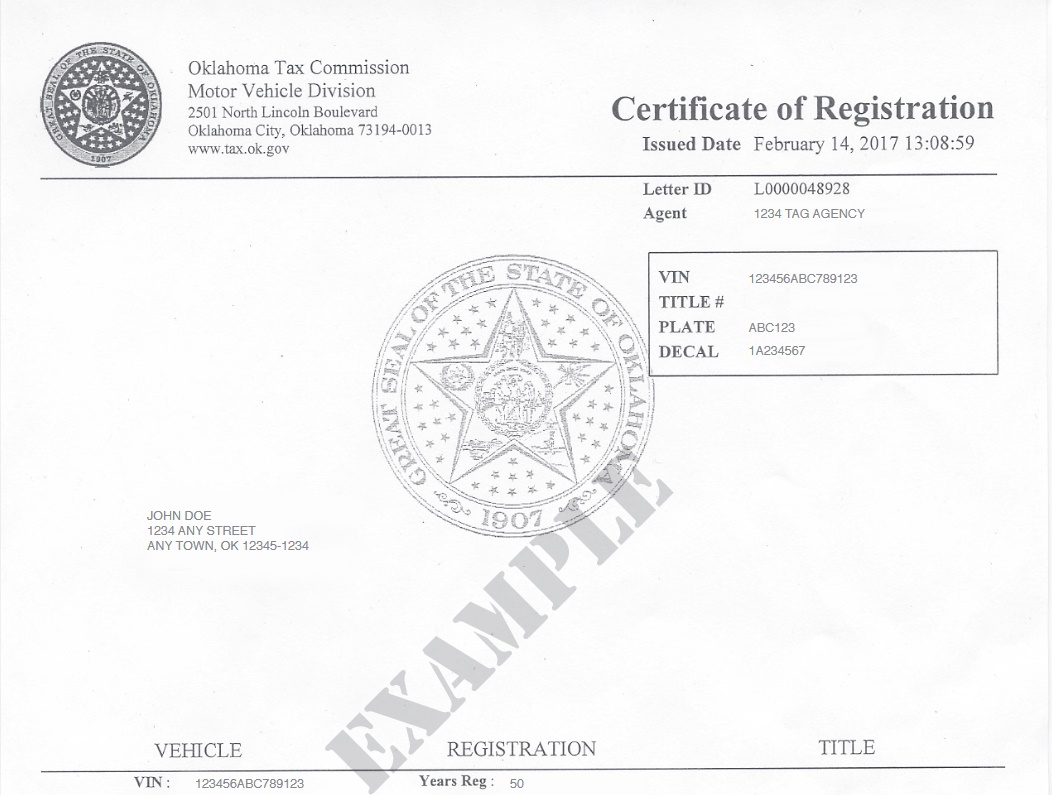
Note that this is a sample of the prior certificate, some aspects of the newer one may differ from this
For new residents, you have a period of 30 days after establishing residency to title and register your vehicle. You’ll also need to purchase a valid Oklahoma car insurance policy. New titling and registrations can be done at any of the nearest tax agent offices.
You’ll also need to bring along the relevant documents:
A vehicle identification number (VIN) and odometer inspection may also be needed in some cases.
After some time, you’ll receive your new license plate. The license plate is registered to the vehicle’s owner, so if you change cars, you’ll also need to transfer the plate to the new car.
Only new cars purchased from a local dealership will receive temporary paper tags, providing the bearer a period of 30 days to complete the titling and registration process.
Plate combinations are six characters long and follow a “123 ABC” format (without quotation marks).
Standard plates: These plates use a modified 2017 plate initially issued from 2017 to March 2022.
Personalized plates: Personalized plates come in six different colors, with up to 7 characters printed (subject to terms and conditions). You can apply for one via the OTC’s official website.
Veteran plates: These are issued to former serving, or active duty, members of any US military outfit, as well as their family members. Plates are also available for those who lost their lives in any while on active duty, former prisoners of war, as well as medal recipients (i.e., the Congressional Medal of Honor).
Disabled plates: Persons with disabilities may apply for disabled plates. You may only apply for disabled plates if you have a 5-year disability placard, which can be obtained from Service Oklahoma.
Specialty plates: This refers to unique plates for organizations, charitable groups, and so forth. These organizations or groups may have a unique style or design of plates, and the criteria for this style may vary from state to state. Currently available include:
Some of these plates may have additional fees and/or contribution fees that you need to pay. Contribution fees have a minimum payment, but you can increase it if you so desire.
Yes, you can! Only relevant information that doesn’t reveal a person’s identity or background will be shared. Moreover, the Freedom of Information Act (FOIA) grants individuals the right to access information collected by the government.
Don’t hesitate: go on and look up that used car you’ve been eyeing today!
state=OK; get the VIN backimport os, requests r = requests.post( "https://vindecoder.p.rapidapi.com/api/v4/decode_plate", data={"plate": "<plate>", "state": "OK"}, headers={ "X-RapidAPI-Key": os.environ["RAPIDAPI_KEY"], "X-RapidAPI-Host": "vindecoder.p.rapidapi.com", }, timeout=10, ) vin = r.json()["data"]["vin"]
const res = await fetch("https://vindecoder.p.rapidapi.com/api/v4/decode_plate", {
  method: "POST",
  headers: {
    "X-RapidAPI-Key": process.env.RAPIDAPI_KEY,
    "X-RapidAPI-Host": "vindecoder.p.rapidapi.com",
  },
  body: new URLSearchParams({ plate: "<plate>", state: "OK" }),
});
const data = await res.json();
if (data.success) console.log(data.data.vin);
curl -X POST "https://vindecoder.p.rapidapi.com/api/v4/decode_plate" \
  --data-urlencode "plate=<plate>" \
  --data "state=OK" \
  -H "X-RapidAPI-Key: $RAPIDAPI_KEY" \
  -H "X-RapidAPI-Host: vindecoder.p.rapidapi.com"
Subscribe on RapidAPI, copy your key, make the call. Upgrade to PRO or ULTRA there when you need more.